Public Irrigation Schemes Now Water Nearly Twice the Farmland They Did in 2013, and Olive Groves Take 44 Percent of It
DGADR's 2025 yearbook counts about 240,000 irrigated hectares across 33 public schemes, permanent crops up 318 percent since 2020, and a squeeze coming on the Guadiana. The ministry and the yearbook give different figures for the sector's economic value.
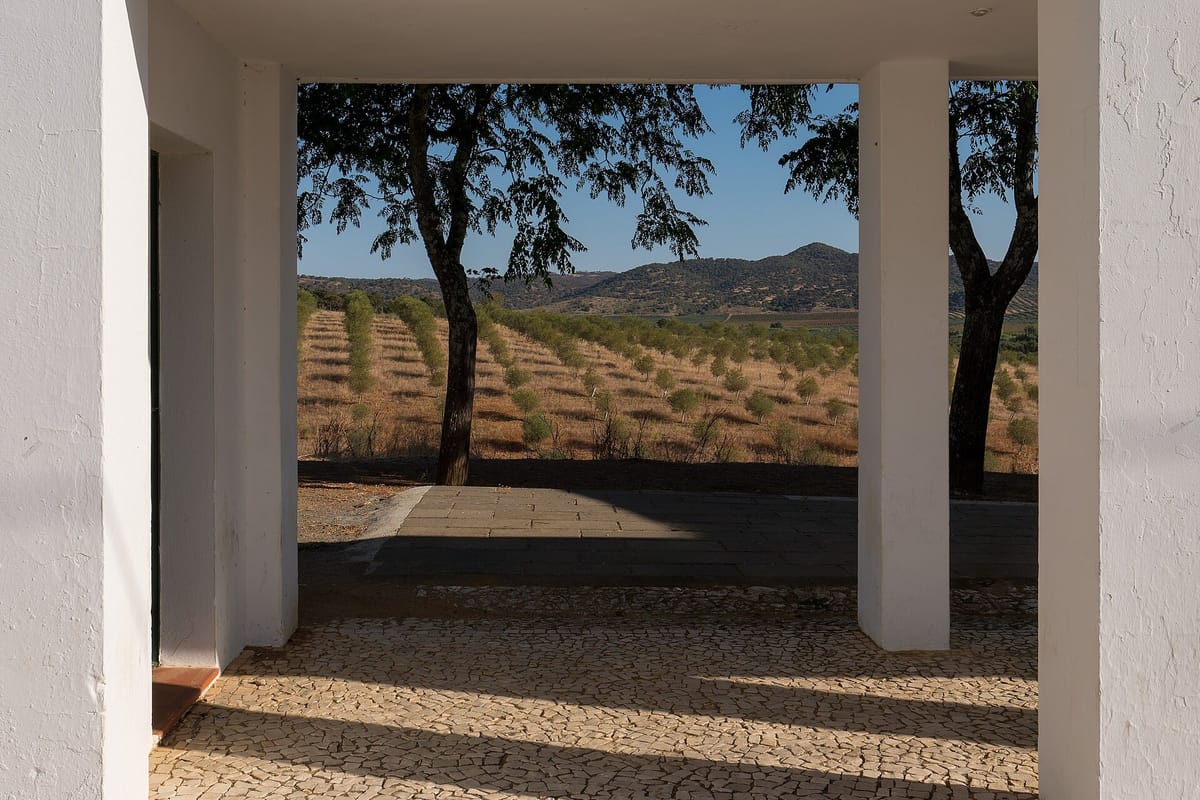
Portugal's public irrigation schemes watered about 240,000 hectares of farmland this year, close to twice the roughly 130,000 hectares of 2013, and olive groves now take up more than 44 percent of that land. The figures come from the 2025 irrigation yearbook (in Portuguese) of the Direção-Geral de Agricultura e Desenvolvimento Rural (DGADR, the Directorate-General for Agriculture and Rural Development), which was presented this week as the Conselho Nacional do Regadio (National Irrigation Council) met again after almost ten years.
The Ministério da Agricultura e Mar (Ministry of Agriculture and the Sea) put the growth at 79.4 percent between 2013 and 2025 in a statement on Friday, reported by Lusa. The yearbook itself measures a rise of 82.6 percent from 2014, while the water consumed grew by only 37.2 percent over the same twelve years, which DGADR reads as a sign that farms are using water more efficiently.
What the yearbook covers
The yearbook covers the 33 aproveitamentos hidroagrícolas (collective public irrigation schemes) on the mainland, from small systems in the Cávado valley and the Algarve to the Alqueva scheme in the Alentejo (the EFMA). Together they cover about 265,000 hectares and serve roughly 32,350 landholders, of whom about 20,300 actually irrigated. It does not include private wells and individual farm systems.
Most of the growth came from land inside the schemes, which rose from just over 100,000 hectares in 2013 to about 180,000. The rest is watered "a título precário": farms outside the scheme boundaries that buy water on temporary terms and are first to be cut off in a dry year. That land peaked near 63,000 hectares in 2020 and is now just under 60,000. It still accounted for about 24 percent of the irrigated area and 18 percent of the water in 2025, and 77 percent of it is under permanent crops, most of all olive groves (32,372 hectares).
The schemes delivered about 992 cubic hectometres of water for farming in 2025. The share lost between the reservoir and the farm gate varies widely: transport efficiency ranged from 60 to 95 percent depending on the age and type of each system.
From maize and rice to olives and almonds
The crops have changed quickly. Between 2020 and 2025 the area under permanent crops in the schemes grew by 318.1 percent, the yearbook says, while annual crops fell by 36.9 percent. In 2025 olive groves covered 44.2 percent of the irrigated area, nuts (mainly almonds and walnuts) 14.6 percent, rice 9.4 percent and maize 8 percent. Vines fell by 9.7 percent over the five years.
DGADR warns that the shift brings less flexibility: an olive grove or an almond orchard needs water every year, so in a drought farmers cannot simply leave a field unplanted. It also notes that only 61 percent of the land equipped for irrigation was used by farmers in 2025, down from 75 percent in 2022, and puts this down to water restrictions in dry years, higher energy costs and changing crop choices.
Less water on the Guadiana
The yearbook expects the pressure to rise in the south. The updated Albufeira Convention with Spain will commit more Guadiana water to other uses: 30 cubic hectometres a year for the Odeleite-Beliche system, which supplies the eastern Algarve; up to 60 for Huelva in Andalusia; and more for river flows (an extra protocol on Guadiana flows went to Parliament in June). Once this takes effect, DGADR expects irrigation's share of the Guadiana's available water to rise from about 18 percent to about 30 percent, and says the Sado and the Guadiana will be "significantly" worse off. The 2025 season itself had sharp water shortfalls in the south, the conclusions note. The 2025/26 water year was the warmest since 1931.
Energy is the other strain. Pumping cost the schemes about 27.4 million euros in 2025, down from 41.4 million in 2023 as electricity prices eased, still about half of what they collected in irrigation fees. At the Várzea de Benaciate scheme in the Algarve, energy spending came to more than six times its maintenance, operation and management costs, and the yearbook says both it and the Alqueva scheme must act quickly to cut their dependence on expensive energy.
Two different figures for the economic value
The ministry's statement put the gross value added (GVA) of irrigated farming in the schemes at 1,760 million euros, or about 0.6 percent of GDP. The 2025 yearbook gives lower figures. It estimates the direct GVA at about 700 million euros, or 0.23 percent of GDP, and between 1.1 and 1.6 billion euros, or 0.37 to 0.51 percent of GDP, once the knock-on effects on food processing, transport and services are added. The 2024 yearbook had put the direct figure at about 900 million euros. The statement did not explain how the ministry reached its total.
A new irrigation law in preparation
The council, which brings DGADR together with the regional development commissions (CCDRs), the national association of municipalities, the Agência Portuguesa do Ambiente (APA, the Portuguese Environment Agency), EDIA (the company that runs Alqueva) and farmers' organisations, met on 25 November at the AGRIHUB innovation centre at the Tapada da Ajuda in Lisbon, DGADR said. It discussed the national irrigation strategy and a new legal framework for irrigation, which the ministry says is meant to simplify procedures and give the schemes more local management. The current rules date from Decreto-Lei n.º 269/82 (Decree-Law 269/82), last amended in 2002.
The Minister of Agriculture and the Sea, José Manuel Fernandes, called irrigation one of the government's "great investment priorities". "We have to keep investing in modernising the infrastructure, in reducing losses and in ever more efficient use of water and energy," he said in the statement. He also told the council that a first draft of a new EU farm-funding programme for the next budget period should be ready by the end of the year.
Irrigated groves are behind Portugal's olive oil boom: olive oil left the mills a fifth cheaper this autumn than a year earlier.